04/11/2026
How do I choose a reliable apartment developer in Queensland?


What really tells you a developer will deliver
SIERA Perspectives | By Brent Thompson, Founder and Managing Director, SIERA
As at 4 November 2026
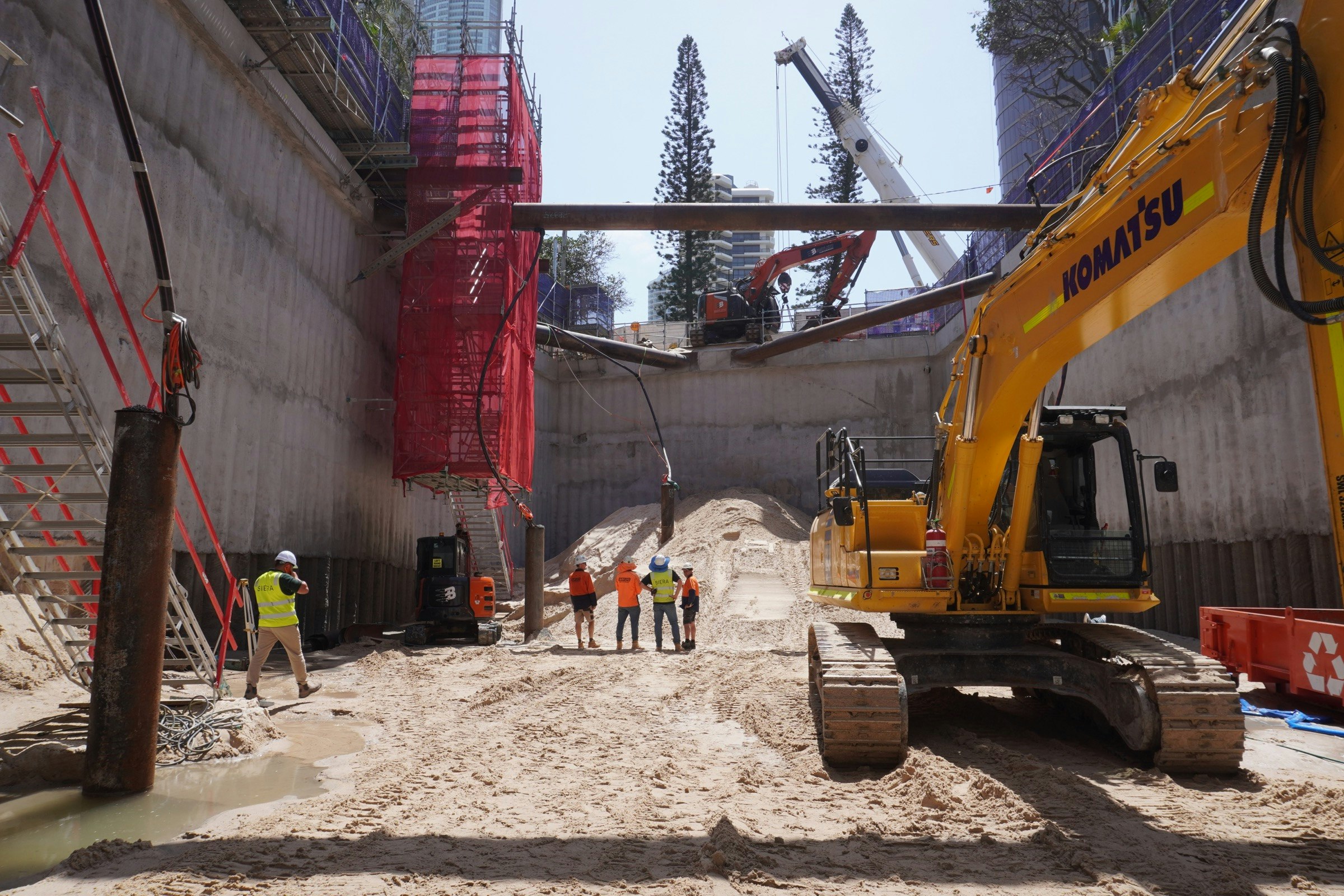
When you buy off the plan, you are trusting a company to build a home you cannot yet walk through. You want to know the building will be finished to the quality promised and that the people who built it will still be there after you move in. In Queensland, the proof that a developer will deliver sits in the company that will build it and the people behind it. SIERA is a Queensland builder-developer that designs, builds, sells, and manages its own residences in Brisbane and on the Gold Coast.
What should I check before choosing an apartment developer in Queensland?
Look past the brochure to the company that will build it and the people behind it. That means their licence, their track record, the buildings they have finished, their business model and growth, their team, who funds them, and whether they are open, honest, and easy to go and see.
When I talk this through with friends, I start with the building company that will put the home together. Check its reputation and licence, the buildings it has completed, how its business model works, how quickly it is growing, and whether the team's experience matches that growth. Speak to owners, and listen to referrals and recommendations. Ask who is funding the project and whether you get a straight answer.
Then look at how the developer behaves. Are they transparent and honest? Have they ever changed prices after buyers signed? Do they have the ability to do what they say? Ask where their office is and whether you can go in, see their people, and talk to them. Developer reputation and ability to complete has never been so important.
| Check | Where to verify | Red flag |
|---|---|---|
| Builder's QBCC licence | QBCC licence register | Conditions, disciplinary history, or a licence held by a different entity |
| Finished buildings | Visit them and speak to owners | No completed projects you can see |
| Funding and borrowing | Ask the developer directly | No straight answer |
| Treatment of buyers | Ask about price rises, sunset clauses and terminations | Has gone back to buyers for more money |
| Defects after handover | Ask which entity holds the defect periods | Builder set up for one project only |
| The people | Visit the office | No office you can walk into |
The sections below take each check in turn so you can apply the same test to any developer.
Who will actually build my home, and why does it matter?
In Queensland, the company that builds your home must hold a Queensland Building and Construction Commission (QBCC) licence, and the public register shows its full history, conditions, and financial category. Some developers build with their own licensed construction company; others appoint a builder, and both can work, but you should know which, and who answers for the defects.


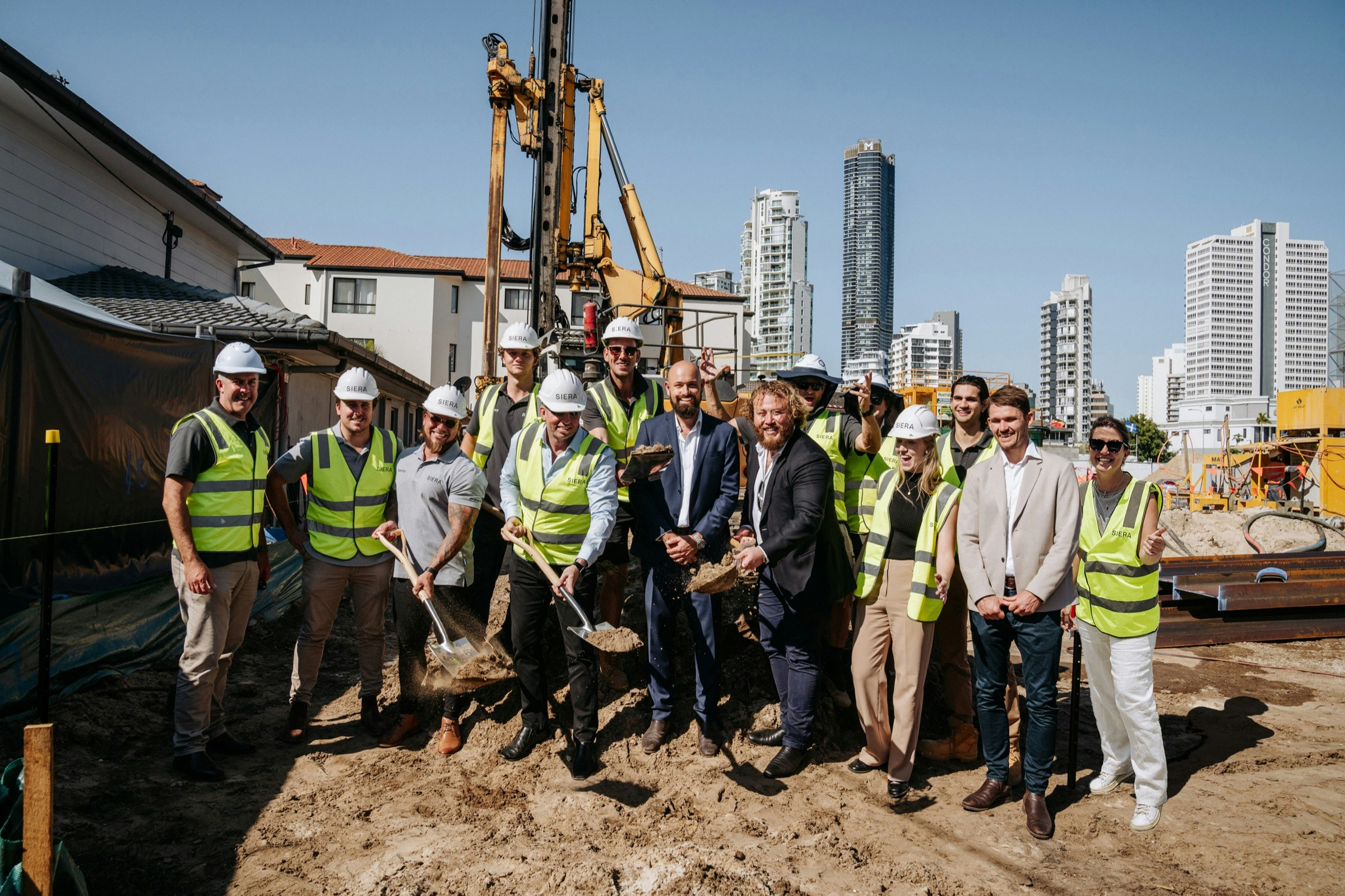
Start with the QBCC licence register, where every licensed company must meet minimum financial requirements at all times and report its finances every year. The QBCC's guide to checking a licensee shows that the register records disciplinary history, licence conditions, licence classes, and maximum allowable revenue, and it advises checking related entities too, as both may hold licences.
A builder-developer is a group that develops property and builds it through its own licensed construction company. SIERA builds through its own licensed construction company, as do some other Queensland developers such as Mosaic Property Group and Aria Property Group.
At SIERA, it is all one team working towards the same goal, and we believe in good discipline across the business, holding each business unit accountable to its own standards. That is why we use a full Australian standard design and construct contract between our development entity and our construction entity, so our construction company is held to the same contract a separate builder would be. Even though our financier does not require one, we write an independent superintendent into that contract to go above and beyond. They are an independent, licensed professional who specialises in administering building contracts, ensuring the contract standards are met and every detail is adhered to. The buck stops with SIERA. We don't pass the buck. We are accountable.
Who stands behind my apartment after I move in?
In Queensland, the home warranty scheme does not cover apartments in buildings more than three storeys above a car park. So in a mid-rise or high-rise building, your real protection is a builder that is still trading and still answerable for the defects.
The rule is clear in the QBCC's wording: "Multiple-unit dwellings more than 3 storeys above a car park are not considered residential construction work and are therefore not insurable under the Queensland Home Warranty Scheme."
Under the QBCC's defective work rules, a complaint about non-structural defects must be made within 12 months of completion. For structural defects, the QBCC can direct rectification for up to 6.5 years from completion. That process only helps in practice if the building company is still operating and able to do the work.


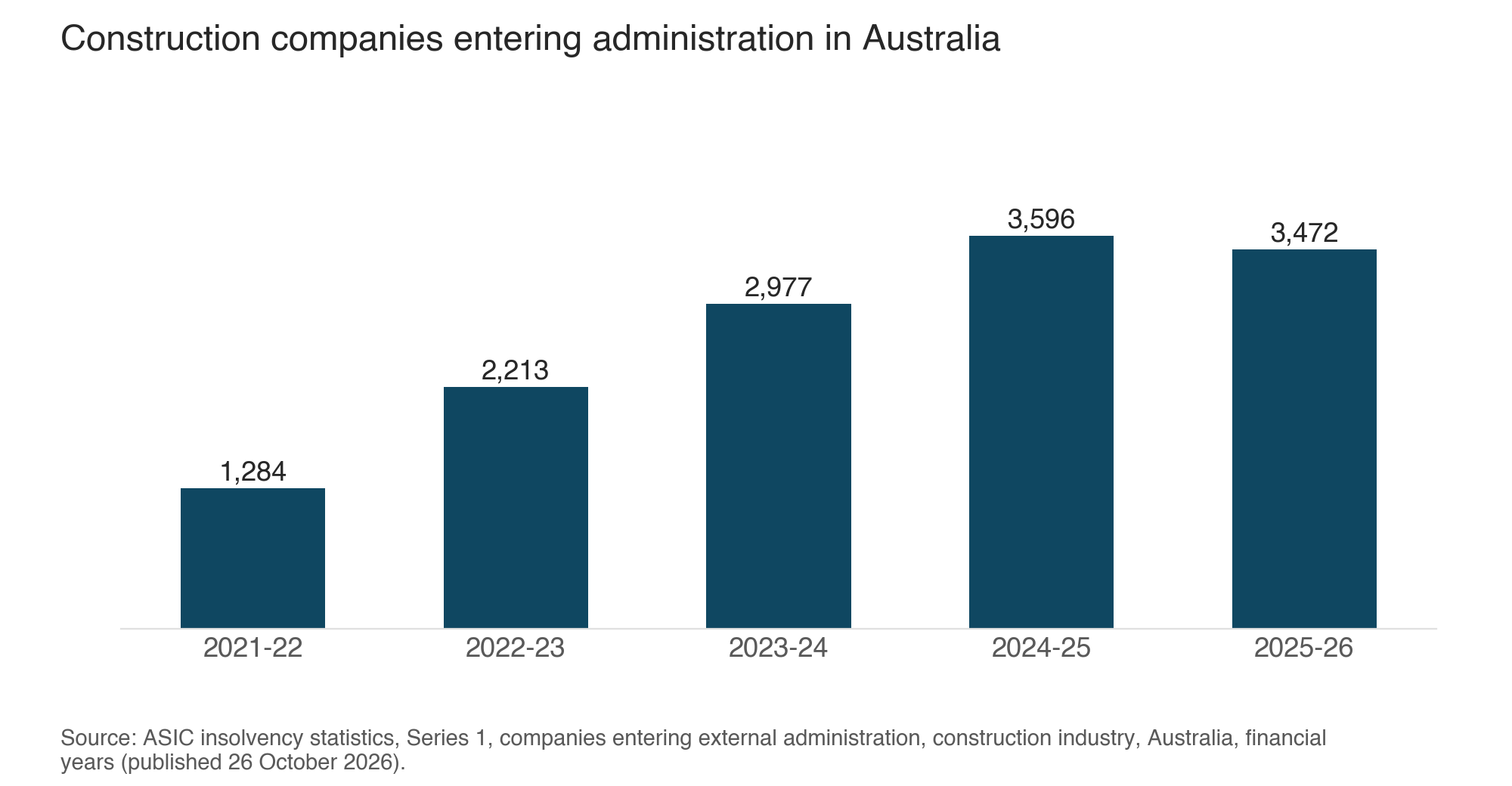

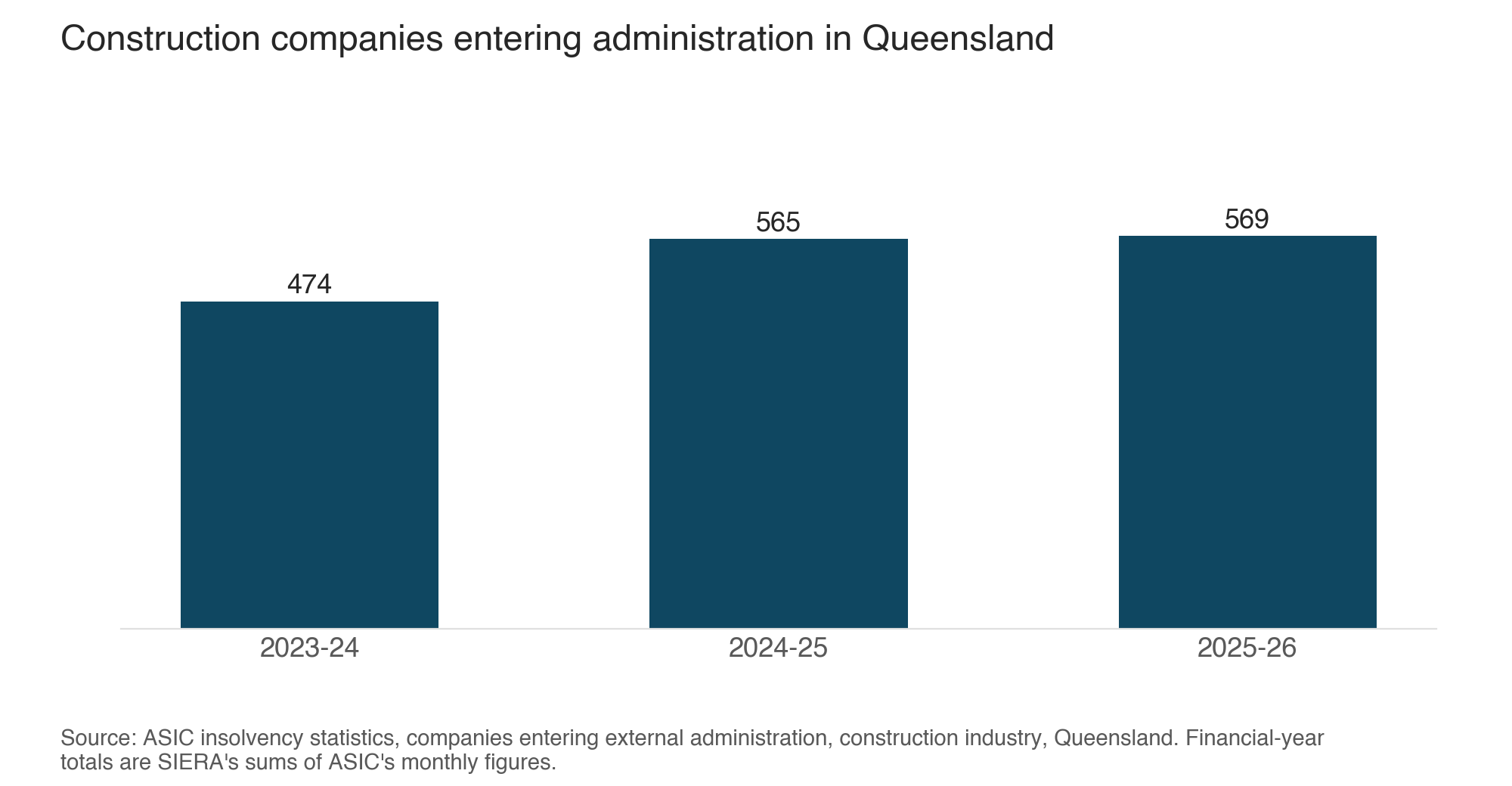
Insolvency statistics from the Australian Securities and Investments Commission (ASIC) show Australian construction companies entering external administration rose from 1,284 in 2021-22 to 3,596 in 2024-25 and 3,472 in 2025-26. In Queensland, SIERA's sum of ASIC's monthly figures shows 569 construction companies entering external administration in 2025-26. Because the defect periods last for years, the company that builds your home needs to last too.
At SIERA, we maintain the statutory defect warranty periods and stay accountable for them, in an entity that continues to trade. Our construction company has traded continuously since 2014. A buyer can ask any developer: will the company that builds my home still be trading, and still responsible, through the defect periods, or was it set up for one building and closed when that building finished?
What has the developer already finished?
The best evidence is buildings already finished and the people living in them. Reputation, referrals, and recommendations from owners tell you more than any marketing.

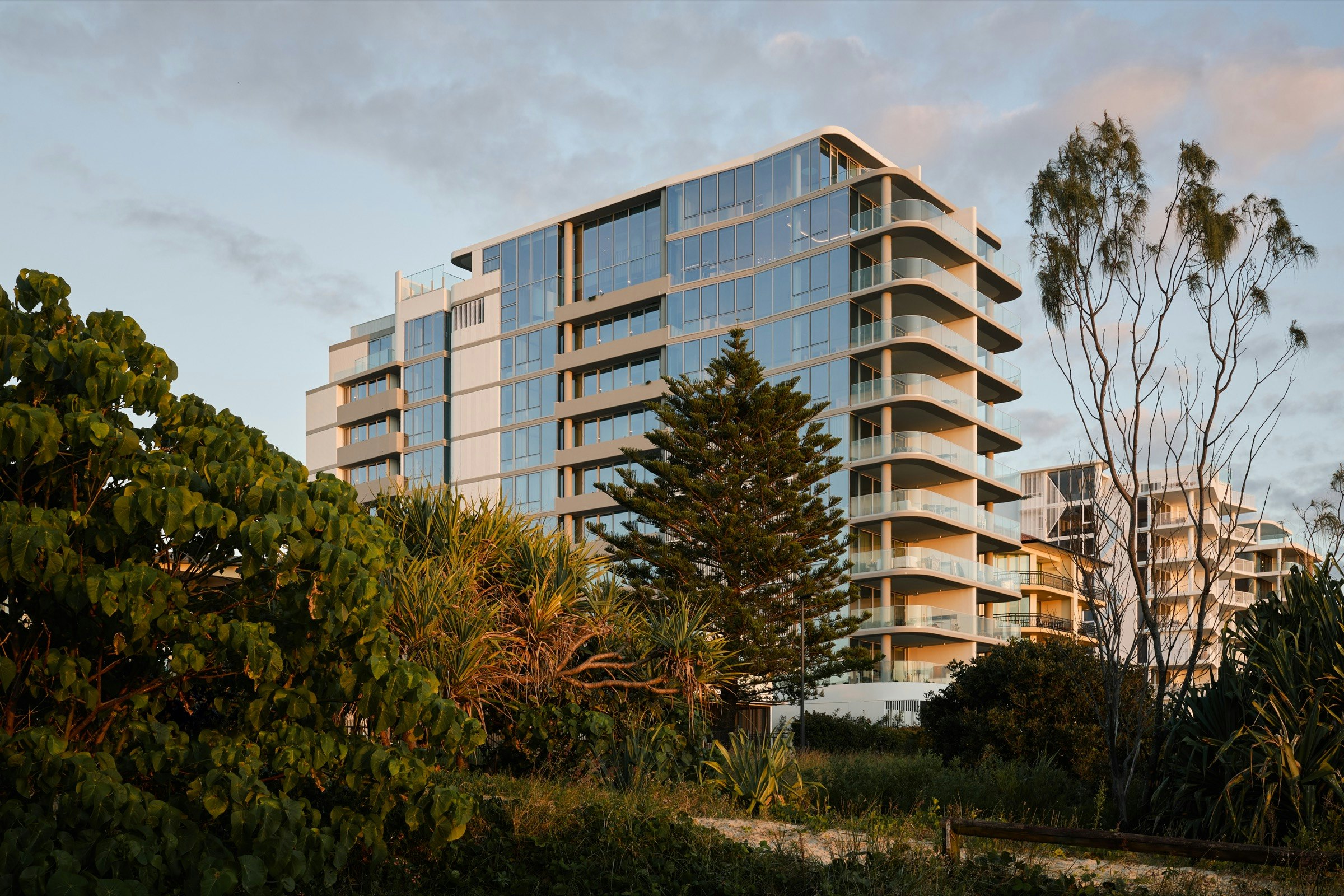
When a friend asks me about a project, the questions are simple: Is it going to be delivered? Is it going to be of the quality I'm promised? Have they delivered projects before? Who is the team working on it?
Go and see a finished building, look at how it has aged, and, if you can, speak to the owners. Ask them:
- Were you an original buyer?
- How was your experience during purchasing?
- How has your experience been after purchase?
- What's communication like?
- What are some things I should watch out for?
- What do you wish you knew before buying?
- Do you think it's a good idea?
Other long-standing Queensland developers, such as Stockwell and Mosaic Property Group, also have records you can check.
At SIERA, we have delivered all of our projects. For ways to test a home and its location before you commit, see Are Off-the-Plan Apartments a Good Option for Retirees and Downsizers?.
What do property awards actually tell me?
An award tells you experienced industry judges found a project excellent in its category, usually for design, innovation and quality at completion. It is real recognition and a good signal. Because most awards are judged at completion, ask the developer directly about what happens after you move in.
Judges in the main programs go and see the buildings for themselves. In the Urban Development Institute of Australia (UDIA) Queensland Awards for Excellence, a presentation or site visit makes up 70% of the score. The Housing Industry Association (HIA) Apartment Complex category gives 50 points to workmanship, and Master Builders Queensland judges on site and requires no outstanding debts or complaints relating to the project. For a buyer, that means a project has been seen and tested by people who know building.


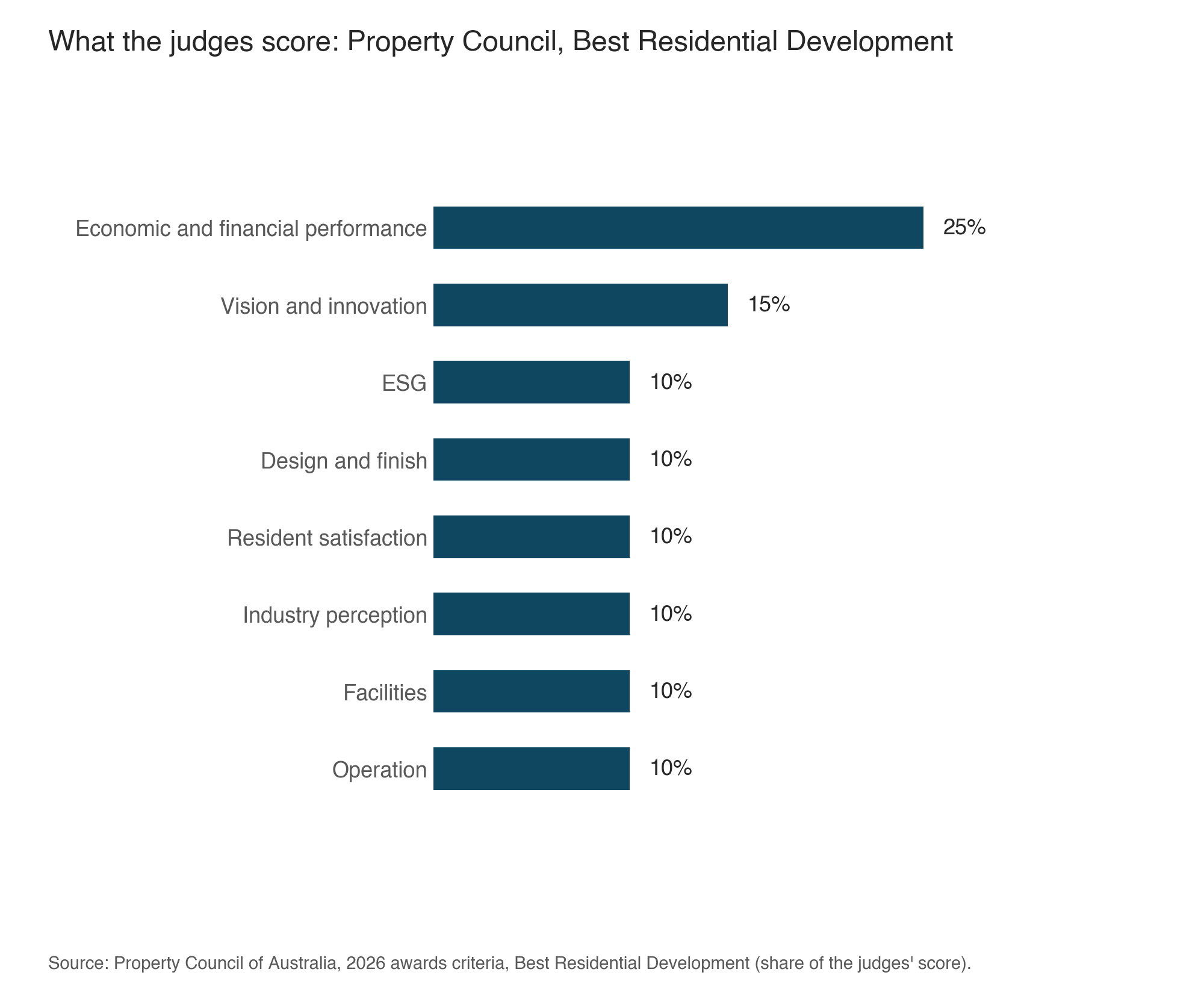
Alongside any award, ask the developer where the rubber really hits the road for the buyer. Were the contracts honoured with the buyers? Were prices put up or changed, or was the project changed? How are maintenance, defects, and statutory requirements handled after handover?

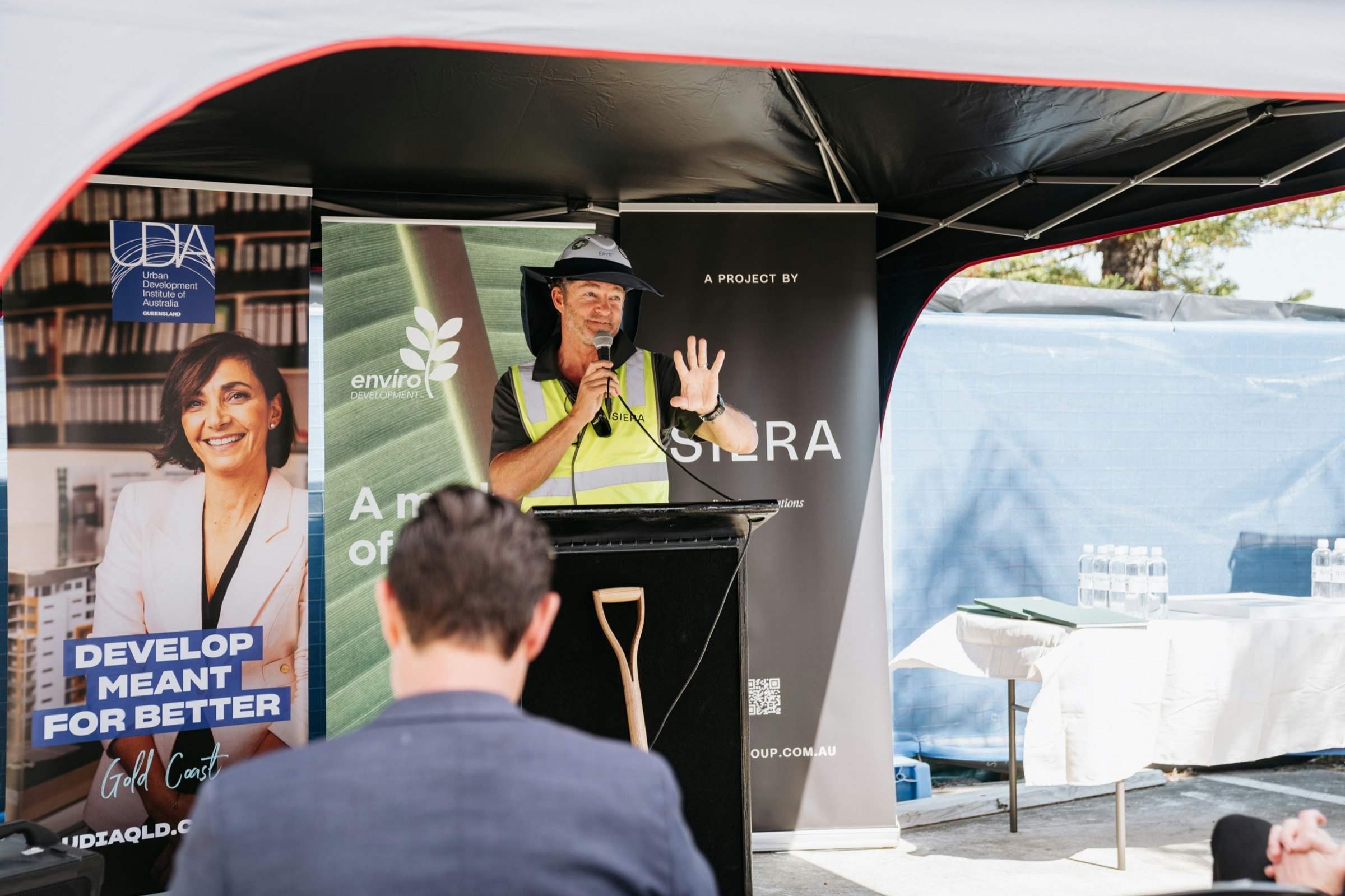
In our early years, we entered awards and received recognition from various industry bodies, including the UDIA and HIA, and I personally received the UDIA Queensland Young Leaders Award. I also served on the UDIA Queensland Board of Directors, and I have judged the UDIA Queensland Awards for Excellence for several years.
For us, we have decided to no longer enter awards, although we think they are fantastic and have their place. We have decided to dedicate our team's attention to delivering the best outcome for our buyers and our stakeholders. We ultimately feel that the true award for us is successful projects, happy owners, happy stakeholders, happy communities, good relationships, and good teams. I think the ultimate judgement of a developer and a development is by the people who live in it, live around it, and are involved in producing it.
Who is funding the developer, and why does it matter?
Ask who is funding the project and how much is borrowed, and expect a straight answer. If you cannot get one, that is the first sign.
The real risk is leverage: the more a developer borrows, the less room it has if costs rise, sales slow, or settlements take longer, and a developer stretched across many projects carries that risk on each. Whether the lender is a bank or a non-bank is not the issue; how much is borrowed is, and funders often see trouble first.
Bathla was a Sydney group whose main entity entered voluntary administration on 25 August 2026, according to the Reserve Bank, with ASIC recording 542 related companies entering external administration that month. The same Reserve Bank note recorded: "Private credit lender Alceon reportedly reduced its exposures to Bathla by the end of last year because it became uncomfortable with Bathla's aggressive growth strategy and leverage." Alceon co-founder Trevor Loewensohn called Bathla "a good borrower", but told ABC News: "They didn't know when to stop, didn't know when to slow down." Balmain's Andrew Griffin said it had scaled back lending because Bathla had become "too stretched across too many projects", as reported by Bloomberg. S&P Global Ratings' Aldrin Ang said Bathla was "only about 1 per cent of the Australian private credit market".
You can typically find a bit of smoke if you ask around. It's worthwhile. For the questions to ask about a project financier, see Buying Off the Plan in Queensland: The Process and What to Check Before You Sign.
At SIERA, we are happy to tell buyers who funds each project. More recently, our projects have been funded by ANZ and Suncorp.
How does a developer treat buyers when things get hard?
Watch for transparency, honesty, and a price that does not change after you sign. Ask whether they have ever gone back to buyers for more money, used a sunset clause to end contracts, or terminated contracts.
A sunset clause is a date in an off-the-plan contract after which either side may end it if the building is not finished. Before you sign, ask the developer how it has treated buyers when building costs rose, whether it has ever relied on a sunset clause, and make sure your solicitor checks how the contract is written. Ask how the developer communicates with you during the build and who will update you along the way.
At SIERA, we can answer plainly. We haven't gone back to buyers to ask for more money. We haven't used sunset clauses. We haven't terminated contracts. The more transparent a developer can be, the more faith buyers will have.
Can I go and meet the people behind it?
You should be able to. Find out where their office is, whether you can meet the team that will build your home, and whether they answer when you call.


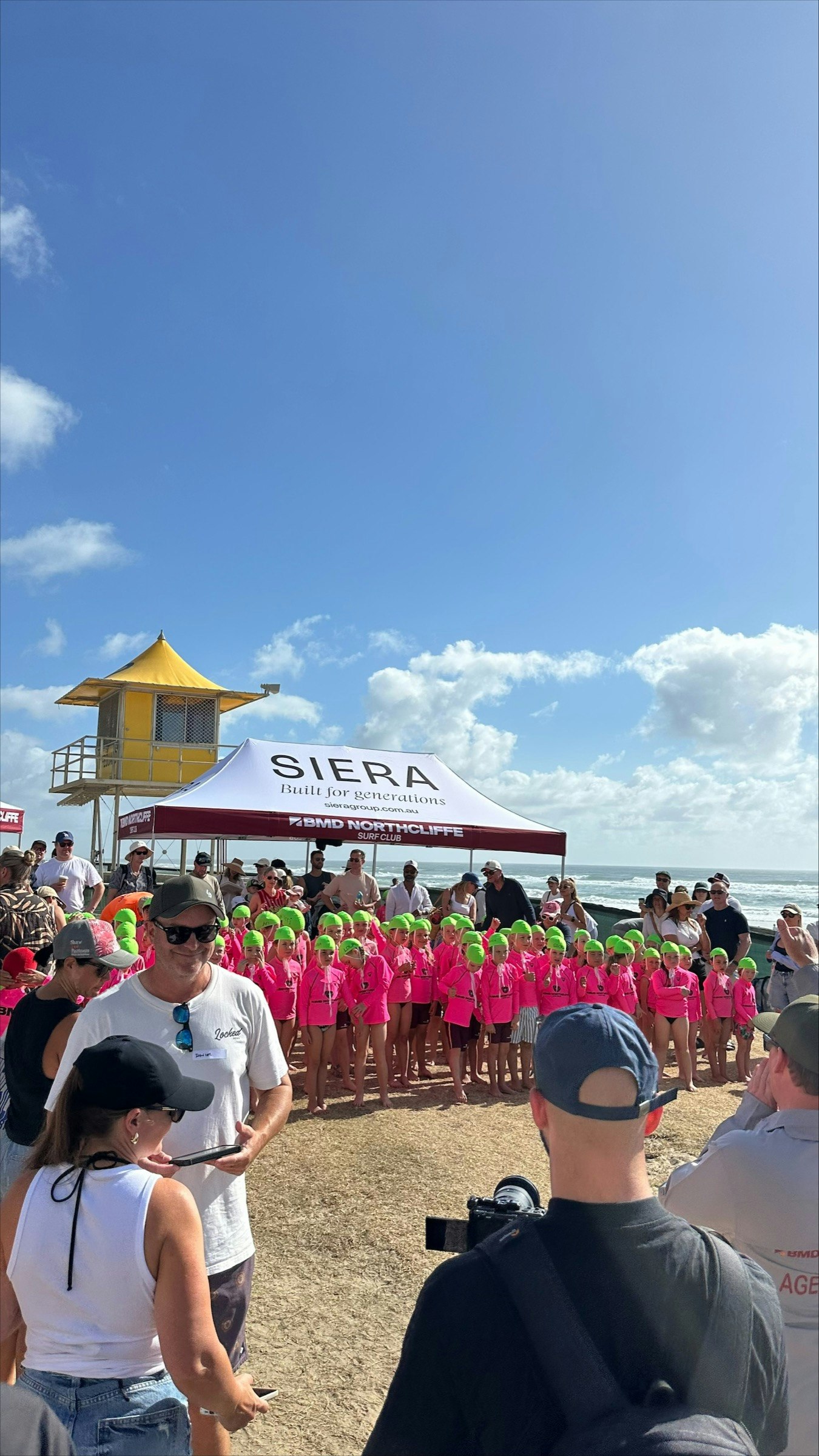
Ask whether you can visit the office and sit down with the people responsible for development, design, construction, and management, and see whether their answers are clear and consistent.
Before you commit, ask: Who is the team working on it? Are they contactable? Are they available? Will I get updates?
A developer you can visit, with people you can talk to, is one that expects to be around. Know who will answer your questions before you sign, and who will answer them after you move in.
How we see it
At SIERA, we chose our model so a buyer always knows who stands behind their home. We're builder-developers because we're builders at heart. Having our own construction team gives us direct control over cost, quality, and time, and keeps us accountable for every detail beyond settlement.
Anyone can check our QBCC licence, 15336339, on the public register, walk past the residences we have finished, and come into our office to meet our people. We also recognise other great developers out there who are delivering great projects, such as Stockwell, Mosaic Property Group, and Aria Property Group.



Choosing the right developer and choosing your timing are two parts of the same decision; if you are weighing timing, see Should I Buy Off the Plan Now or Wait for the Market to Settle?. Whichever home you look at, bring it back to the company that will build it, the people behind it, their licence and track record, who funds them, and whether they will still be there after you move in.
Questions buyers ask
Who are the best residential developers in Australia?
There is no single national ranking, so judge any developer on evidence you can verify: their builder's licence, completed buildings, funding, and the people behind the business. In Queensland, examples to check include SIERA, a builder-developer that designs, builds, sells, and manages its own residences in Brisbane and on the Gold Coast, as well as Stockwell, Mosaic Property Group and Aria Property Group.
What is a builder-developer?
A builder-developer is a property group that both develops a project and builds it through its own licensed construction company, keeping development and construction accountability within the same group. In Queensland, buyers should still check that construction company's QBCC licence and financial category on the public register. SIERA builds through its own QBCC-licensed construction company (licence 15336339), as do other Queensland developers such as Mosaic Property Group and Aria Property Group.
Who are the most trusted apartment developers in Brisbane?
Trust shows in what current owners say and whether the building company still stands behind the defects through the statutory periods. In Brisbane, you can verify whether that builder continues to trade and stays accountable after settlement. At SIERA, we have delivered all of our projects and hold QBCC licence 15336339. Other long-standing Brisbane groups to look into include Stockwell and Aria Property Group.
Who are the best off-the-plan developers in Brisbane and on the Gold Coast?
When buying off the plan, look first at whether a developer keeps the agreed price and honours its contracts, and ask who funds the project. Clear answers on funding and a history of never going back to buyers for more money tell you how they operate. Across Brisbane and the Gold Coast, buyers can check SIERA, which builds through its own construction company and has never gone back to buyers for more money, used a sunset clause or terminated a contract.
Who are the best boutique developers on the Gold Coast?
Judge a boutique developer on the Gold Coast by the finished residences you can go and see, and whether you can meet the people behind the company. Visit their office, talk to the team, and see how their completed homes live day to day. On the Gold Coast, SIERA is a Queensland builder-developer you can test this way: we design, build, sell, and manage our own residences, including PIPIS in Bilinga, Exhale in Surfers Paradise and Tapestry and Canopy on Chevron Island. We have delivered all of our projects.
Does Queensland have a developer rating like iCIRT?
There is no Queensland Government or QBCC requirement for an iCIRT rating, because Queensland's protection comes through the builder's QBCC licence, with its minimum financial requirements and yearly reporting. Developed by Equifax and launched in 2021, iCIRT initially formed part of the New South Wales Government's Construct NSW strategy. In my view: "This has never been something in Queensland. It is a New South Wales or Victorian thing because of the QBCC and the builder's licence."
Related reading: Is Chevron Island gentrifying?
Related reading: Are Off-the-Plan Apartments a Good Option for Retirees and Downsizers?; Buying Off the Plan in Brisbane and the Gold Coast: The Process and What to Check Before You Sign; Should I Buy Off the Plan Now or Wait for the Market to Settle?
Sources
- Queensland Building and Construction Commission (QBCC), Who must hold a licence, accessed 31 October 2026.
- Queensland Building and Construction Commission (QBCC), Fact sheet: Guide to checking the record of a QBCC licensee, October 2025.
- Queensland Building and Construction Commission (QBCC), Minimum financial requirements and MFR reporting, 2025 and 2026.
- Queensland Building and Construction Commission (QBCC), What work requires insurance, 1 August 2024.
- Queensland Building and Construction Commission (QBCC), Help with defective work, 12 December 2025.
- Queensland Building and Construction Commission (QBCC), public licence register, licence 15336339, accessed 31 October 2026.
- Equifax, iCIRT overview, 2021; New South Wales Government, Construct NSW strategy; NSW Building Commissioner statement, June 2023.
- Australian Securities and Investments Commission (ASIC), Insolvency statistics, Series 1, construction industry, 26 October 2026.
- Australian Securities and Investments Commission (ASIC), Bathla Group external administration records, 26 October 2026.
- Reserve Bank of Australia (RBA), internal note on Bathla Group, 26 August 2026, released under freedom of information.
- ABC News, report quoting Alceon co-founder Trevor Loewensohn on Bathla Group, 29 October 2026.
- Bloomberg, reported by The Star, report quoting Balmain chief executive Andrew Griffin, 4 September 2026.
- The Urban Developer, report quoting S&P Global Ratings' Aldrin Ang, 28 September 2026.
- Urban Development Institute of Australia (UDIA) Queensland, Awards for Excellence 2026 entry and judging information, 2026.
- Property Council of Australia, National Awards for Excellence, Best Residential Development 2026 criteria, 2026.
- Housing Industry Association (HIA), Apartment Complex category entry and judging criteria, accessed 31 October 2026.
- Master Builders Queensland, 2026 Housing & Construction Awards entry criteria, 2026.
- Mosaic Property Group, corporate profile and project history, accessed 31 October 2026.
- Aria Property Group, corporate profile, accessed 31 October 2026.
- Stockwell (W.A. Stockwell), corporate profile, accessed 31 October 2026.
- Inside Gold Coast, Meet Brent Thompson (a story sponsored by SIERA), 26 October 2026.
Brent Thompson is the Founder and Managing Director of SIERA, a Queensland builder-developer.
Published 4 November 2026. We will check and update this article by February 2027.
Disclaimer: This article provides general information only and is not financial, legal, or property advice; check the QBCC licence register and get independent legal advice before you sign.


